
Los Angeles DUI Lawyer
Board-Certified Criminal Law Specialist defending serious DUI charges in Los Angeles, including felony DUI and DUI causing injury or Death.
Debra S. White is a Los Angeles DUI lawyer and Board-Certified Criminal Law Specialist who has defended hundreds of DUI cases throughout Los Angeles County, including Van Nuys and the San Fernando Valley. She represents clients in serious DUI matters, including refusals, accident cases, felony DUI, DUI drugs, and DUI causing injury or death. Her practice is deliberately non-volume, with direct, hands-on representation focused on challenging the stop, field sobriety testing, chemical test evidence, and the prosecution’s theory from the outset.
You can also read more about Debra S. White and read client reviews.
A DUI Arrest in Los Angeles Is a Criminal Prosecution — Not a Traffic Ticket
A DUI arrest in Los Angeles County is not a traffic citation. It is a criminal prosecution, layered on top of a separate DMV administrative license suspension process. As a Los Angeles DUI defense lawyer, Debra S. White represents individuals facing misdemeanor and felony DUI charges throughout Los Angeles County, including Van Nuys, San Fernando, Downtown Los Angeles, and the San Fernando Valley. These cases are technical, evidence-driven, and aggressively prosecuted.
Debra S. White’s approach to DUI defense is grounded in constitutional litigation, forensic toxicology analysis, and disciplined trial strategy — not high-volume plea processing.
DUI cases are technical prosecutions that require a layered defense strategy and counsel with substantial courtroom experience. From the initial traffic stop through chemical testing and courtroom litigation, each stage presents constitutional and evidentiary issues that can materially affect the outcome of a case.
Additional information about Debra S. White’s background and professional experience is available on her About page.
DUI Charges Under California Law
Most DUI prosecutions are filed under:
Vehicle Code § 23152(a)
Driving under the influence of alcohol (impairment theory).
Vehicle Code § 23152(b)
Driving with a blood alcohol concentration (BAC) of 0.08% or greater (per se theory).
Vehicle Code § 23152(f)
Driving under the influence of drugs.
Vehicle Code § 23152(g)
Driving under the combined influence of alcohol and drugs.
A defendant may be charged under multiple subsections at the same time.
A § 23152(a) case requires proof that your mental or physical abilities were impaired to the degree that you could not drive as a sober person would under similar circumstances.
A § 23152(b) case requires proof that your BAC was 0.08% or higher at the time of driving — not merely at the time of testing.
These are legally distinct theories.
What Happens After a DUI Arrest in Los Angeles?
After a DUI arrest in Los Angeles County, two separate proceedings begin:
A criminal case in Superior Court.
A DMV Administrative Per Se (APS) license suspension.
You have 10 days from the date of arrest to request a DMV hearing. If no hearing is requested, the suspension proceeds automatically.
The DMV case is civil. The criminal case is prosecuted by the District Attorney. The burdens of proof are different. Winning one does not automatically resolve the other.
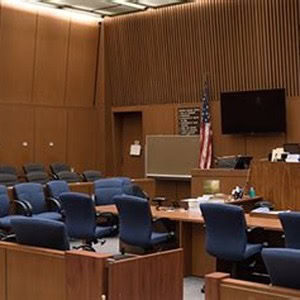
Where Will My DUI Case Be Filed?
The filing court depends on where the arrest occurred.
San Fernando Valley DUI Cases:
DUI arrests that occur in the San Fernando Valley and nearby communities, including Calabasas, are commonly filed in:
• Van Nuys Courthouse
• San Fernando Courthouse
Central Los Angeles DUI Cases:
DUI arrests in central Los Angeles, including Hollywood, are frequently filed in:
• Metropolitan Courthouse (Metro Court – 1945 S. Hill Street)
• Other Downtown Los Angeles criminal divisions
Other Los Angeles County Courthouses:
Depending on the location of arrest, DUI cases may also be filed in other Los Angeles County criminal courthouses, including Airport Courthouse for arrests that occur in Westside cities, including Santa Monica.
Ventura County DUI arrests are prosecuted through the Ventura County Superior Court located at 800 S. Victoria Ave., Ventura, CA 93009.
Venue matters. Judicial assignment, prosecutorial posture, and courtroom culture vary by courthouse.
Are Field Sobriety Tests Scientifically Reliable?
Field sobriety tests (FSTs) were developed by the National Highway Traffic Safety Administration (NHTSA). The three standardized tests are:
• Horizontal Gaze Nystagmus (HGN)
• Walk-and-Turn
• One-Leg Stand
NHTSA validation studies assume strict compliance with standardized administration protocols under controlled conditions.
In real-world roadside environments in the San Fernando Valley or Downtown Los Angeles — uneven pavement, traffic lighting, fatigue, footwear issues — reliability may be affected.
Non-standard tests such as alphabet recitation, counting backward, or finger-to-nose are not scientifically validated indicators of alcohol impairment.
FST evidence is opinion-based and subject to cross-examination.
How Is BAC Proven in Los Angeles DUI Cases?
Vehicle Code § 23152(b) prosecutions rely on chemical testing.
Breath Testing
Evidential breath instruments estimate BAC using a 2100:1 partition ratio assumption between breath and blood alcohol. Individual physiology varies.
Common litigation issues include:
• Observation period compliance
• Instrument calibration and maintenance logs
• Mouth alcohol contamination
• GERD-related interference
• Partition ratio variability
Blood Testing
Blood samples are analyzed using gas chromatography in forensic laboratories.
Blood cases may involve:
• Chain of custody questions
• Preservative and anticoagulant integrity
• Improper storage
• Fermentation
• Retrograde extrapolation assumptions
A chemical test result does not automatically establish BAC at the time of driving. Retrograde extrapolation requires assumptions about absorption phase, drinking pattern, and elimination rate.
What Is a High BAC DUI?
In Los Angeles County courts, a BAC of:
• 0.15% or higher
• 0.20% or higher
may result in enhanced penalties or aggravating factors at sentencing.
High BAC allegations typically rely on a single chemical test number. They do not account for rising alcohol levels during the absorption phase.
The number must be evaluated in scientific context.
What Happens If I Refused a Breath or Blood Test?
Under Vehicle Code § 23612, California’s implied consent law, a driver lawfully arrested for DUI must submit to chemical testing.
To prove a refusal, the prosecution must establish:
• A lawful arrest
• Proper advisement of consequences
• A clear refusal
Refusal allegations carry enhanced license suspensions and potential increased sentencing exposure.
Body-worn camera evidence is often central to whether a refusal was clear and unequivocal.
What Is Probable Cause for a DUI Stop and Arrest?
Every DUI case begins with a Fourth Amendment analysis—Your constitutional right to be free of unreasonable searches and seizures by the government/law enforcement.
To stop a vehicle, an officer must have reasonable suspicion of a Vehicle Code violation or criminal activity.
To arrest for DUI, the officer must have probable cause that the driver was under the influence.
Commonly alleged indicators include:
• Lane weaving
• Speed irregularities
• Odor of alcohol
• Bloodshot or watery eyes
• Slurred speech
• Field sobriety test performance
• Preliminary alcohol screening results
Many DUI cases in Van Nuys and Downtown Los Angeles turn on whether the arrest occurred before sufficient objective evidence existed.
These issues are litigated through Penal Code § 1538.5 motions to suppress.
What Is DUI With Injury? (Vehicle Code § 23153)
Vehicle Code § 23153 applies when DUI allegedly causes injury to another person.
The prosecution must prove each of the following:
1. DUI
2. Commission of a negligent act
3. Causation of injury
In Los Angeles County, DUI with injury cases are often filed as felonies when significant injury is alleged.
If great bodily injury is alleged under Penal Code § 12022.7, the case may qualify as a strike.
Causation — not merely intoxication — is frequently the central issue.
What is a Drug DUI (Vehicle Code § 23152(f))
Vehicle Code § 23152(f) prohibits driving under the influence of drugs.
There is no per se numerical limit for most drugs.
Drug DUI cases rely heavily on:
• Officer observations
• Drug Recognition Evaluator protocol
• Toxicology results
The mere presence of a drug metabolite does not automatically prove impairment at the time of driving.
What Are the Penalties for DUI in Los Angeles?
Penalties depend on:
• Prior DUI convictions within 10 years
• BAC level
• Refusal
• Injury
• Aggravating factors
A first DUI may include:
• Up to six months in county jail
• Informal probation
• A 3–9 month DUI education program
• Fines and penalty assessments
• Ignition interlock device requirements
Second and third offenses carry increased custody exposure and longer program requirements, typically a 18-month minimum program.
Felony DUI cases may involve state prison and strike consequences. For more information about Felony DUI, visit: Felony DUI Defense.
Sentencing outcomes vary depending on courthouse, prior record, and case posture.
DUI Defense Strategy in Van Nuys, San Fernando & Downtown Los Angeles
Effective representation may involve:
• Fourth Amendment suppression litigation
• Scientific cross-examination of chemical testing
• Independent toxicology review
• Accident reconstruction analysis in injury cases
• Implied malice analysis in Watson prosecutions
Debra S. White approaches DUI defense with trial readiness from the outset.
When everything is on the line, early strategic intervention matters.
Frequently Asked Questions About DUI in Los Angeles:
Can I fight a DUI charge in Van Nuys or Downtown Los Angeles?
Yes. A DUI charge can be challenged in multiple ways, including suppression of an unlawful stop, attacking probable cause for arrest, challenging field sobriety test administration, and scrutinizing breath or blood testing procedures. Many DUI cases turn on technical weaknesses rather than obvious innocence or guilt.
Is a 0.08% BAC automatic guilt?
No. Vehicle Code § 23152(b) requires proof that your BAC was 0.08% or greater at the time of driving. A test result taken later does not automatically establish that level at the time you were operating the vehicle. Retrograde extrapolation and absorption-phase issues frequently arise.
What is retrograde extrapolation?
Retrograde extrapolation is a mathematical estimate used by prosecutors to argue what a person’s BAC was at the time of driving based on a later test result. It requires assumptions about drinking pattern, food intake, absorption rate, and elimination rate. Those assumptions are often contestable.
Will I lose my license after a DUI arrest in Los Angeles?
If you do not request a DMV Administrative Per Se hearing within 10 days of arrest, your license suspension will proceed automatically. The DMV process is separate from the criminal case and must be addressed immediately.
What happens if I refused a breath or blood test?
A refusal allegation can lead to enhanced license suspension periods and additional penalties. To sustain a refusal, the prosecution must prove lawful arrest, proper advisement, and a clear refusal. Body-worn camera footage often becomes critical evidence.
Can a DUI be reduced to reckless driving?
In some cases, a DUI charge may be resolved as a “wet reckless” under Vehicle Code § 23103.5, which is a reckless driving offense involving alcohol. Although a wet reckless carries less severe penalties than a DUI conviction, it is treated as a prior DUI for sentencing purposes if a second DUI occurs within ten years. Whether such a reduction is available depends on the strength of the evidence, the individual’s prior record, and strategic negotiation with the prosecution. It is not automatic.
What is the difference between DUI and DUI with injury?
DUI with injury (Vehicle Code § 23153) requires proof of DUI plus a negligent act that caused injury. Causation is a separate legal element and must be independently established.
What is a Watson DUI?
A Watson DUI refers to a second-degree murder charge based on People v. Watson (1981) 30 Cal.3d 290. It may be filed when a person with prior DUI history allegedly drives under the influence and causes a fatal collision with implied malice.
How long does a DUI case take in Los Angeles County?
Misdemeanor DUI cases may resolve in several months, but cases involving injury, high BAC allegations, or contested suppression issues can take significantly longer. Strategic timing matters.
Should professionals or licensed individuals handle a DUI differently?
Yes. Doctors, lawyers, pilots, commercial drivers, nurses, executives, and public figures may face licensing, employment, immigration, or reputational consequences beyond the court sentence. DUI defense strategy must account for collateral impact from the beginning.
DUI Defense for Professionals and High-Exposure Clients
A DUI arrest can affect more than your driving privilege.
For professionals, executives, licensed individuals, and public-facing clients, consequences may include:
- Professional licensing board reporting
- Credentialing implications
- Immigration consequences
- Insurance and employment impact
- Reputational harm
DUI defense in these cases must be strategic from the outset — not reactive. Court outcome, charge level, and language in the disposition can matter beyond sentencing.
Los Angeles DUI defense attorney Debra S. White handles DUI cases with expert analysis, over 25 years of courtroom experience, and close attention to the collateral consequences that follow.
Speak Directly with Debra s. White
Board-Certified Criminal Law Specialist
Los Angeles Criminal Defense Attorney
Confidential, no-cost consultations for serious criminal matters.